


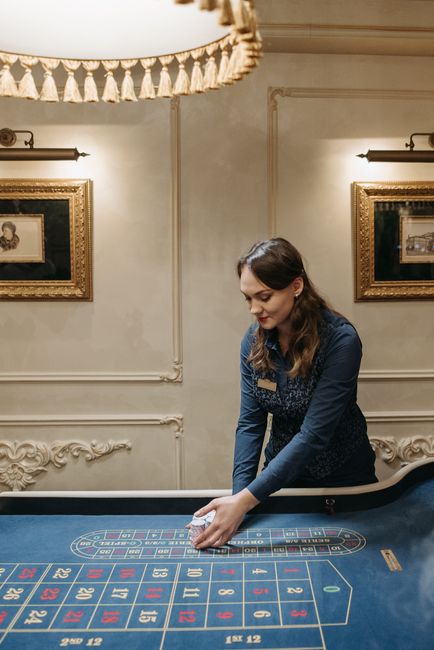
You’ve seen the flashy graphics and the promises of overnight fortunes. But let’s be honest: the gap between a casual gambler and a consistent winner isn’t luck—it’s approach. Whether you’re spinning the reels, bluffing your way through a poker tournament, or sweating a three-team parlay, there’s a craft to this. This isn’t about “beating the system” or finding a loophole. It’s about understanding the mechanics, managing your bankroll, and making smarter decisions than the average player. If you’re tired of donating your money to the house, stick around. Here’s how to actually play the game.
Slots: Beyond the Hype and the Lights
Let’s kill a myth right now: slots are not “due” for a payout. Each spin is independent, governed by a Random Number Generator (RNG) that cycles through thousands of outcomes every second. However, that doesn’t mean you’re helpless. The key lies in understanding volatility and RTP (Return to Player).
RTP is the theoretical percentage of all wagered money a slot pays back over millions of spins. A 96% RTP means the house edge is 4%. Online slots often have higher RTPs than their land-based cousins (which can dip to 85-90%). Always check the game info—if it’s not listed, skip it.
Volatility is your risk dial. Low volatility slots pay small amounts frequently, ideal for stretching a small bankroll. High volatility slots tease you with long dry spells but can explode with massive payouts. If you have a $100 bankroll and want to play for a few hours, stick to low-volatility games with bets around 1% of your bankroll ($1 per spin). If you’re chasing a jackpot, accept that you might lose that $100 in 20 minutes.
- Check the RTP: Anything below 95% online is subpar. Aim for 96%+.
- Match volatility to your goal: Low for fun, high for a lottery shot.
- Use bonuses wisely: A 100% match up to $200 sounds great, but read the wagering requirements. 40x bonus means you must bet $8,000 before withdrawing. That’s a trap.
One more tip: stop-loss and win-stop limits. Decide before you play that you’ll walk away if you lose $50 or win $100. This prevents the classic tilt spiral where you chase losses and blow your budget.
Poker: The Skill Game That Feels Like Gambling
Poker is the only game in this article where long-term success is possible through pure skill. But that skill isn’t about memorizing hand rankings—it’s about understanding ranges, position, and psychology. If you’re still playing every hand that looks pretty, you’re a fish.
Position is king. Acting last gives you information. If you’re on the button (last to act), you can play a wider range of hands because you see what everyone else does first. Under the gun (first to act)? Tighten up. Fold that K-9 offsuit—it’s a trap hand.
Bankroll management is non-negotiable. A common rule for cash games is to have at least 20 buy-ins for the stake you’re playing. If you want to play $1/$2 no-limit, you need $4,000 dedicated to poker. Why? Because variance is brutal. Even if you’re a 60% favorite, you’ll lose that hand 40% of the time. Without a proper roll, one bad session wipes you out.
For tournaments, the rule is looser: 50-100 buy-ins. If you’re playing $10 sit-and-gos, have $500-$1,000 set aside. This absorbs the swings.
Finally, study. Watching Twitch streams passively does nothing. Review your hand histories. Use solvers to see where you misplayed. The difference between a break-even player and a winner is often just plugging one or two leaks.
Sports Betting: Numbers Over Narratives
Sports betting is emotional. That’s why bookmakers love it. The public bets with their hearts—on their favorite team, on a gut feeling, on a hunch. You need to bet with math. The goal isn’t to pick winners; it’s to find value. A bet is only good if the odds are higher than the true probability of the outcome. Those comparing choices often turn to สล็อต.
Implied probability is your tool. Odds of +150 mean the book thinks the team has a 40% chance to win (100 / (150+100)). If you calculate the true chance is 50%, that’s +EV (expected value). You should bet it. Over time, those edges compound.
Line shopping is free money. Different sportsbooks offer different lines for the same game. Betting a -110 instead of a -115 doesn’t seem like much, but over 500 bets, it’s thousands of dollars. Use an odds comparison site.
- Focus on one or two leagues. You can’t be an expert in everything. Pick the NBA and Premier League, for example, and ignore the rest.
- Track your bets. Spreadsheet: date, game, odds, stake, result. You’ll quickly see which types of bets you’re good at (spreads, totals, props) and which are bleeding you dry.
- Don’t parlay for profit. Parlays are lottery tickets. They’re fun for small stakes, but the house edge multiplies with each leg. Stick to straight bets for serious bankroll growth.
Bankroll Management: The Unsexy Superpower
Every professional gambler will tell you the same thing: your bankroll is your lifeblood. Treat it like an investment portfolio, not a night out. Here’s a simple framework:
- Separate funds: Never mix gambling money with rent, groceries, or savings. If you lose it all, it shouldn’t affect your life.
- Unit sizing: A “unit” is 1-5% of your bankroll. For slots, keep spins at 1% or less. For sports betting, 1-2% per bet. For poker cash games, buy in for 5% max.
- Recalculate monthly: If your bankroll grows, your unit size grows. If it shrinks, it shrinks. This is anti-martingale—you never chase losses with bigger bets.
Discipline here is what separates the 1% from the 99%. You can have the best slot strategy or poker instincts, but if you’re betting 20% of your roll on a single hand, you’re one bad beat from busto.
When to Walk Away (And Why You Probably Won't)
The hardest part of gambling isn’t the math—it’s the psychology. Tilt, greed, and FOMO destroy more bankrolls than bad beats. You need pre-set rules. Write them down. “I will stop after 3 hours.” “I will stop if I lose 3 buy-ins.” “I will not play when I’m angry or drunk.”
Casinos and online platforms are designed to keep you playing. Free drinks, flashing lights, 'just one more spin' buttons. They know that the longer you play, the more the house edge grinds you down. Your only defense is a hard stop. Set a timer on your phone. When it goes off, cash out. No negotiation.
And if you ever feel like you’re chasing losses or playing with money you can’t afford to lose, walk away permanently. No strategy beats a gambling addiction. There’s no shame in recognizing that.
Final Thoughts: The Long Game
iGaming is a marathon, not a sprint. The players who last—and actually profit—are the ones who treat it like a business. They study, they track, they manage risk, and they never let emotions drive decisions. Slots will still have house edges, sports betting will still have variance, and poker will still have fish. But with the right approach, you’re no longer the fish. You’re the grinder. And that’s a much better seat at the table.


Leave a reply